.webp)
In the construction industry, MEP (Mechanical, Electrical, and Plumbing) plays a critical role in ensuring that buildings function efficiently, safely, and comfortably. MEP refers to the design and installation of essential building systems, including mechanical systems such as HVAC (Heating, Ventilation, and Air Conditioning), electrical systems like power distribution and telecommunications, and plumbing systems that handle water supply, drainage, and specialized pipelines such as medical gas. These systems are fundamental to the performance of any building, as they directly impact indoor comfort, energy efficiency, and operational reliability.
Traditionally, MEP systems were designed using separate 2D drawings, often leading to coordination issues between disciplines. However, with the advancement of digital technology, Building Information Modeling (BIM) has transformed how MEP systems are planned and executed. BIM enables the integration of all MEP components into a single, coordinated 3D digital environment. Instead of working with fragmented drawings, engineers and designers can now develop a comprehensive model that includes both geometric and technical information, such as dimensions, materials, and system capacities.
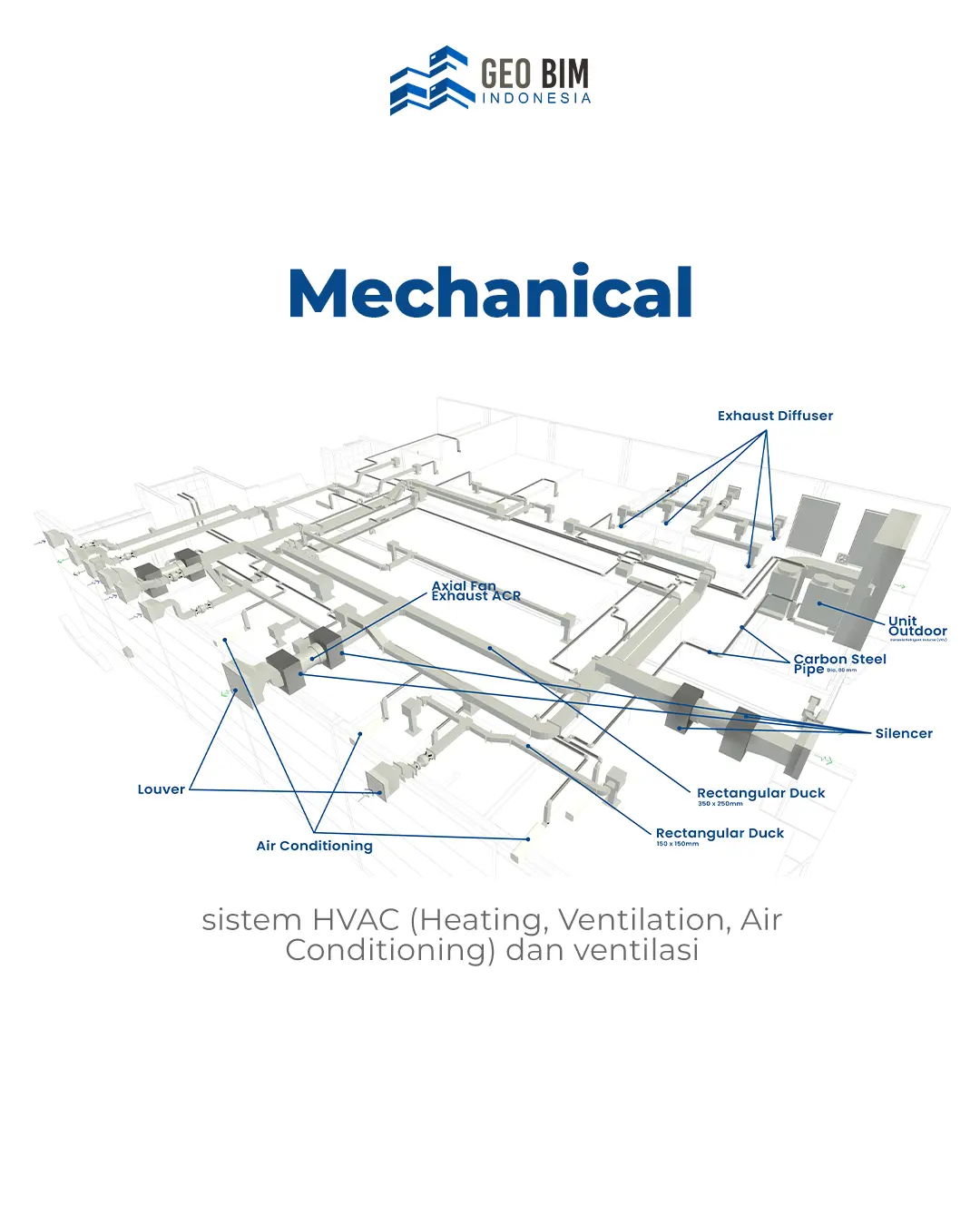
Within a BIM environment, MEP components are created as parametric objects. This means that each element, such as ducts, pipes, cables, and equipment, contains embedded data and can automatically adjust when changes are made. For example, modifying the size of a pipe will automatically update connected elements, ensuring consistency across the entire model. This parametric approach significantly improves design accuracy, reduces manual errors, and enhances overall project efficiency.
One of the most valuable advantages of integrating MEP into BIM is the ability to perform Clash Detection. This process identifies conflicts or interferences between building components before construction begins. For instance, a duct intersecting with a structural beam or a pipe clashing with an electrical conduit can be detected early in the design phase. By using tools, project teams can combine models from different disciplines into a federated model and run automated clash analyses.
The results of Clash Detection are typically documented in clash reports, which help teams identify, assign, and resolve issues systematically. This coordination process is often guided by a BIM Execution Plan (BEP), which defines modeling standards, clash tolerances, and responsibilities among stakeholders. By resolving conflicts in the digital model rather than on-site, projects can avoid costly rework, delays, and inefficiencies.
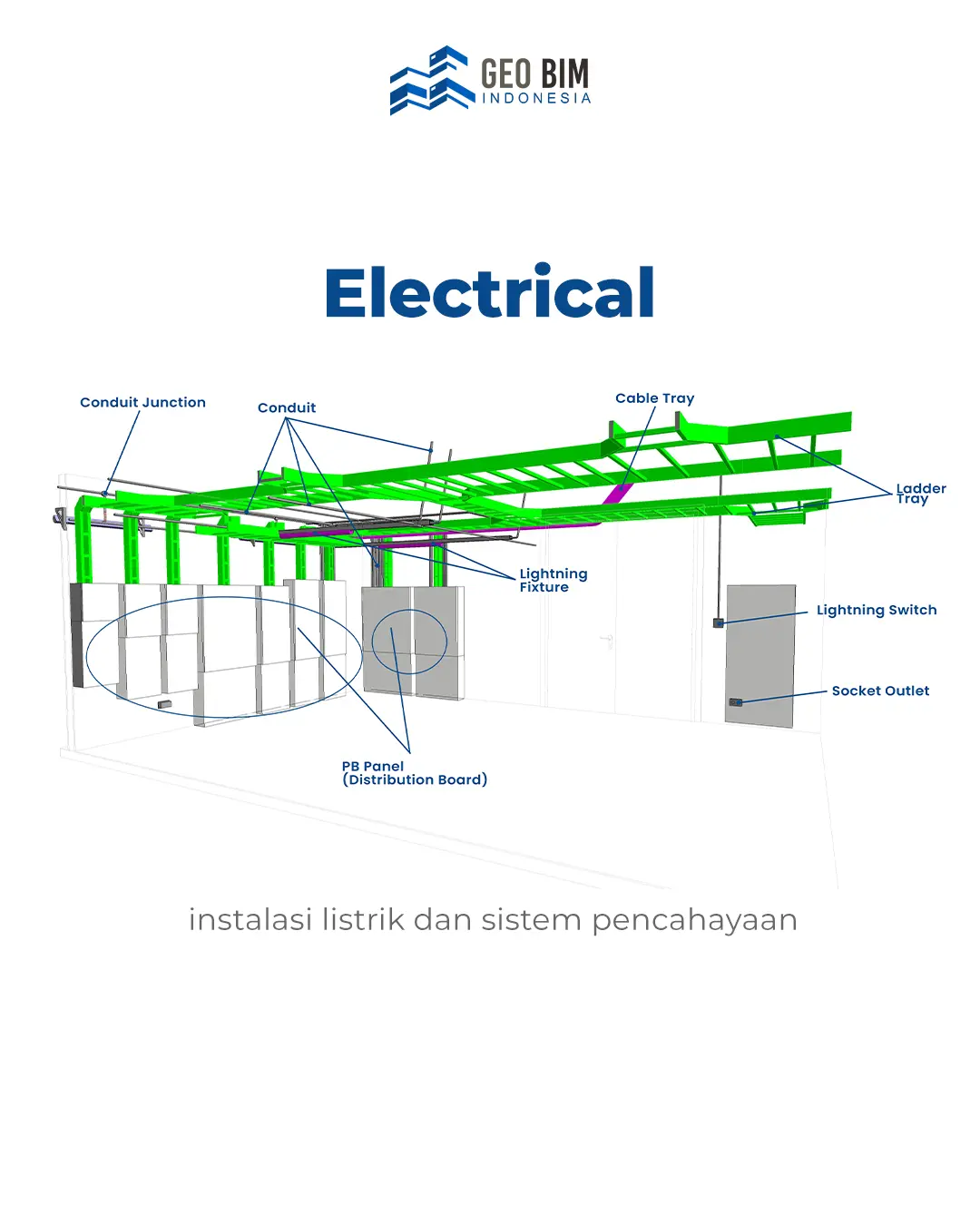
In addition to improving coordination, BIM also supports the creation of As Built Drawings. These drawings represent the final constructed condition of the building and are derived directly from the updated BIM model. As Built Drawings are essential for facility management, maintenance, and future renovations, as they provide accurate and reliable documentation of all installed systems, including MEP.
Overall, the integration of MEP within BIM represents a significant advancement in construction practices. It enables better collaboration, enhances design accuracy, and reduces risks throughout the project lifecycle. As projects become more complex, the need for precise and coordinated MEP systems continues to grow, making BIM an indispensable tool in modern construction.
.webp)
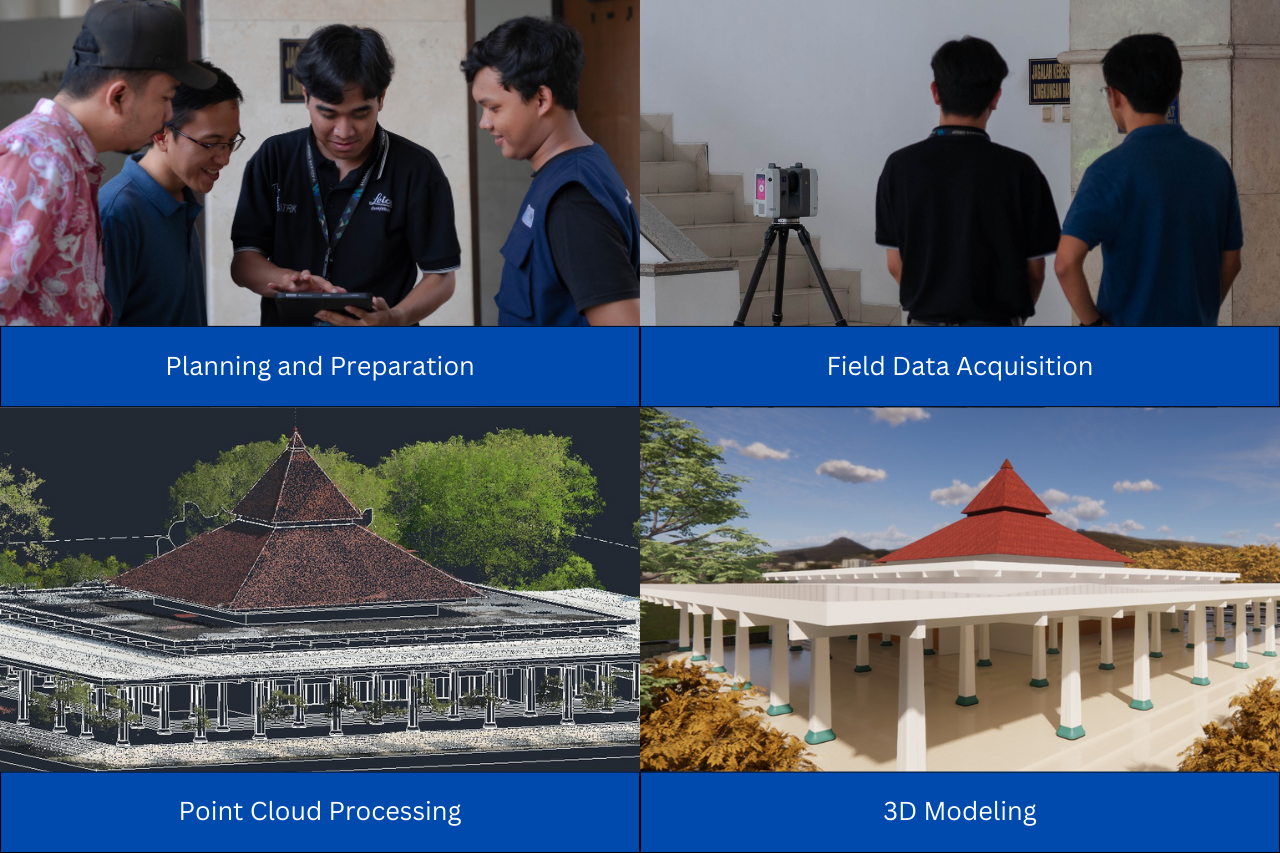
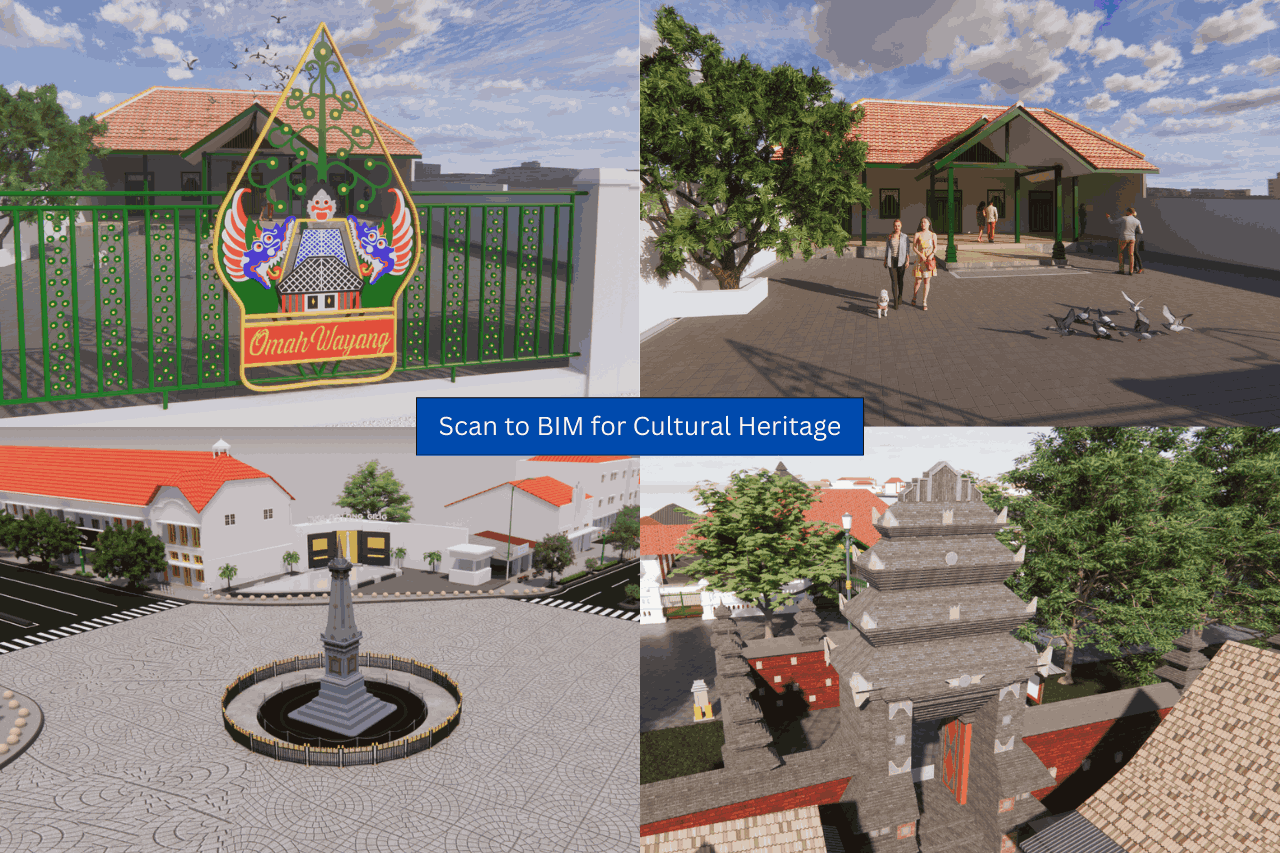
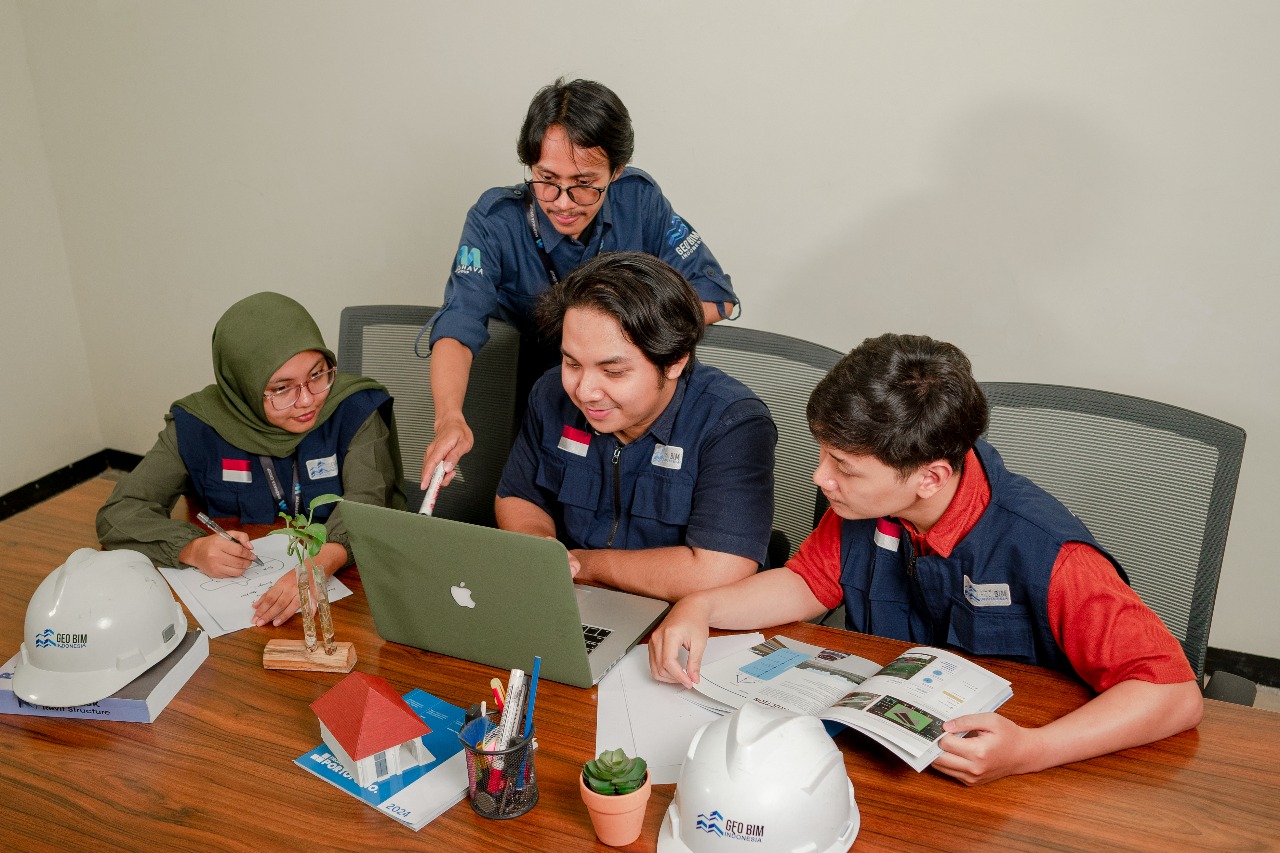
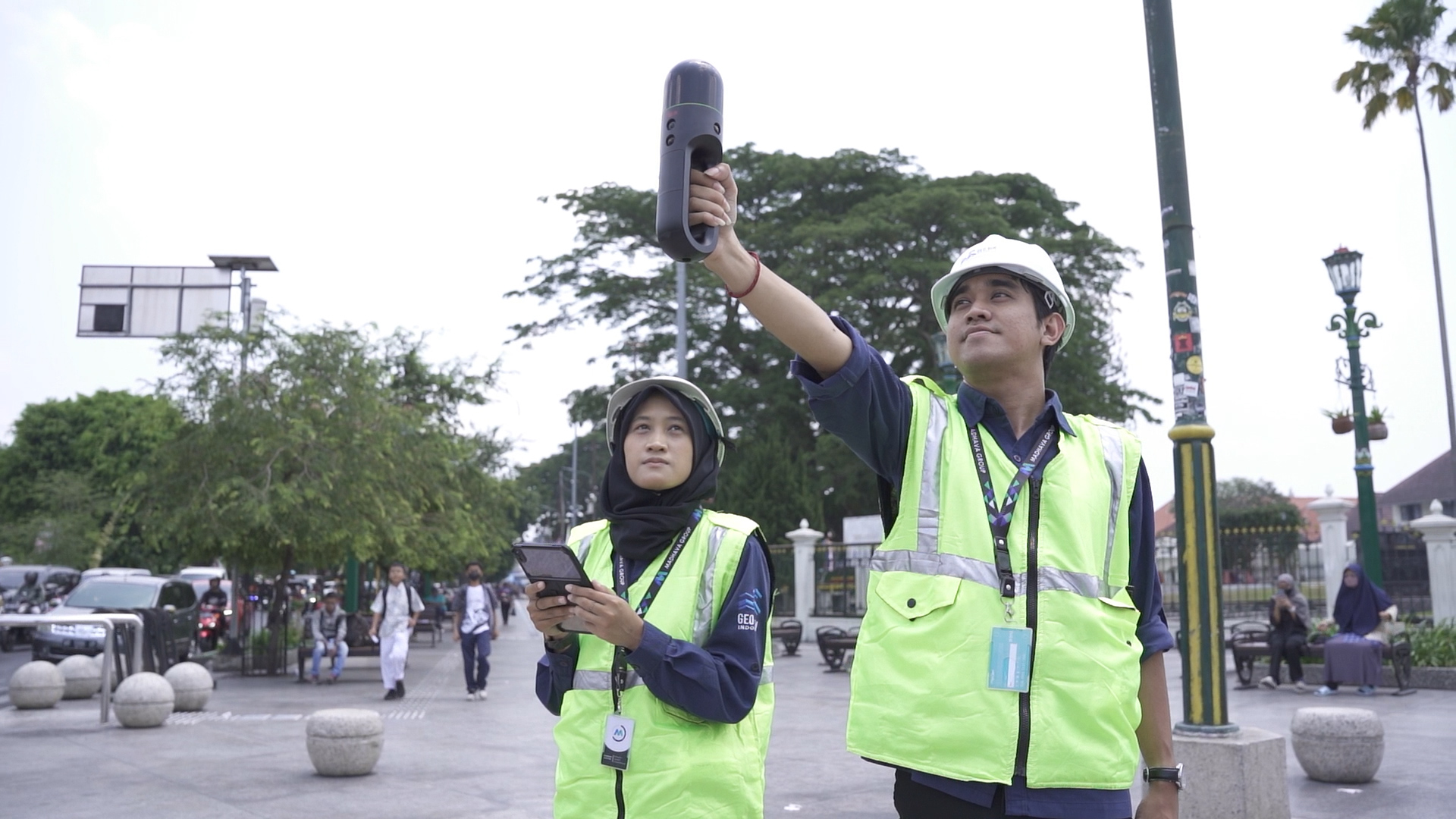
In Indonesia, the adoption of BIM is steadily increasing, and professional support is often required to implement it effectively. This is where Geo BIM Indonesia plays an important role. As a consulting service provider, Geo BIM Indonesia offers solutions such as MEP 3D modeling, scan to BIM, and As Built Drawing development. By leveraging advanced technologies like laser scanning and digital modeling, they help convert real-world conditions into accurate and data-rich BIM models.
With services that support both new construction and existing building projects, Geo BIM Indonesia contributes to improving project efficiency, reducing errors, and ensuring better coordination across all disciplines. Their expertise in BIM-based workflows makes them a valuable partner in delivering high-quality, integrated construction solutions in today’s digital era.
.png)