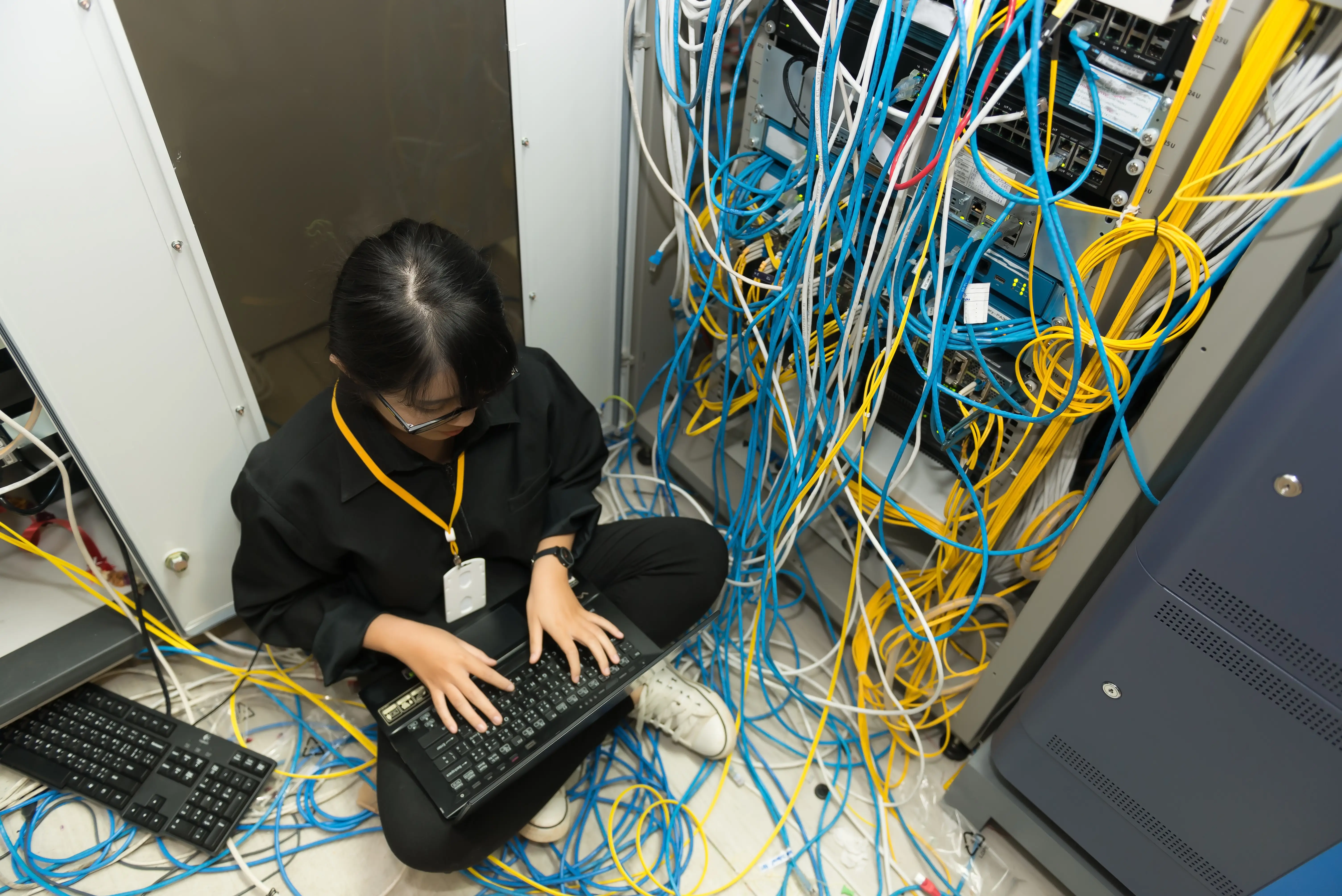
Messy and poorly documented cable management remains a major challenge in many Data Centers. Unlabeled cables, overcrowded trays, and outdated documentation often turn simple troubleshooting into a time-consuming process. When the network suddenly goes down, IT Administrators may spend hours manually tracing cables just to locate the root cause of the issue.
This is not merely about aesthetics or neatness. In a Data Center environment, every minute of downtime can result in operational losses, reduced productivity, and reputational risk. Poorly managed cable infrastructure also increases the likelihood of accidental unplugging, network looping, and even overheating due to overloaded cable trays.
BIM for Data Center Optimization
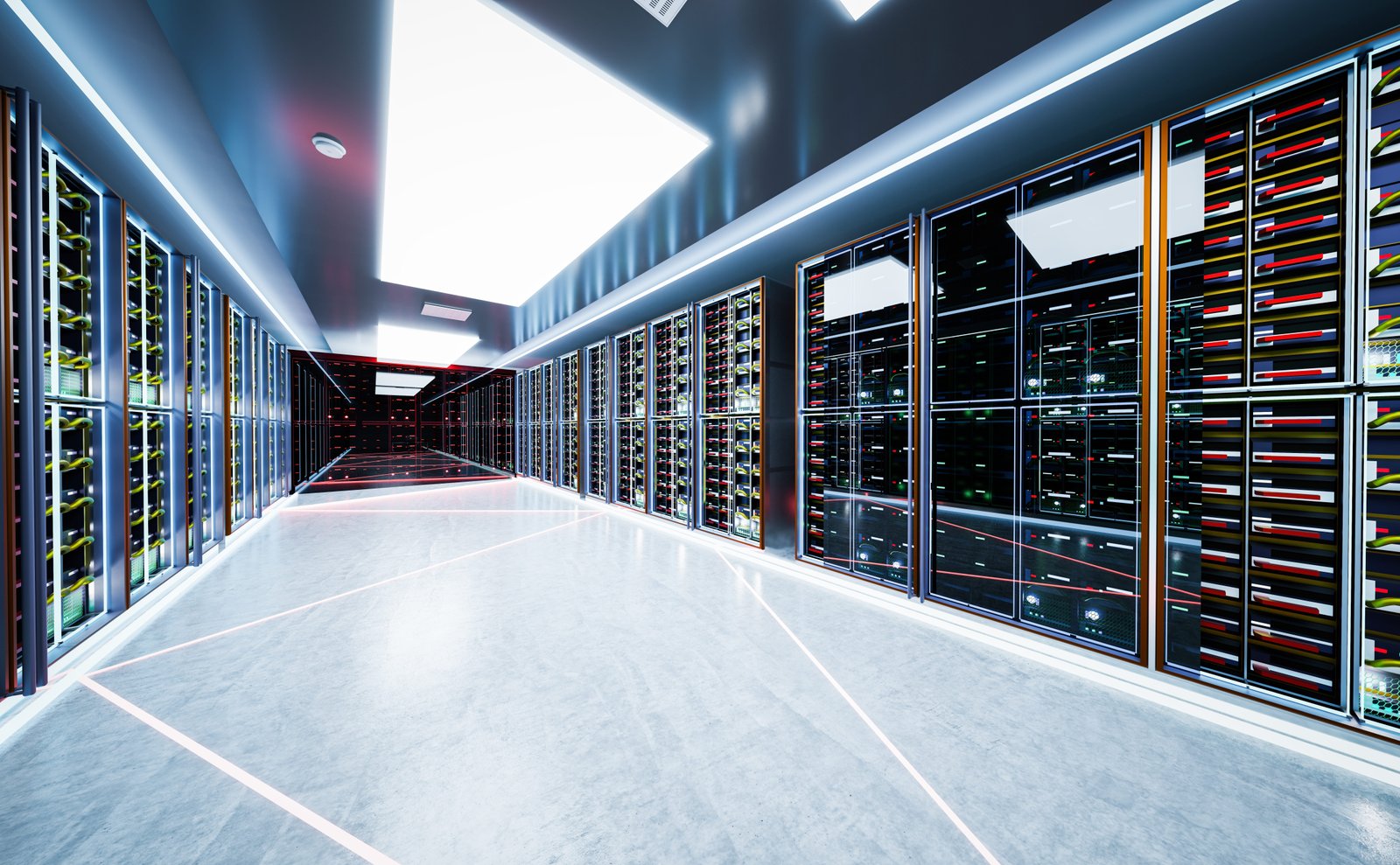
BIM (Building Information Modeling) introduces a more structured and data-driven approach to managing Data Center infrastructure. Through a comprehensive 3D model, all systems, including cable routes, trays, racks, panels, and supporting equipment are digitally represented in an integrated environment. This 3D model is not just a visualization tool. Each element contains detailed information such as technical specifications, capacity, physical location, and update history. As a result, IT teams and facility managers gain full visibility of the infrastructure without repeatedly performing physical inspections.
With BIM Data Center implementation, cable pathways can be clearly traced from source to endpoint directly within the digital model. There is no need to dismantle trays, unplug cables for testing, or rely on assumptions. Everything is documented and accessible in one centralized system.
Another major advantage of BIM is clash detection. This capability allows teams to identify potential conflicts between systems before they become real-world problems. For example: cable trays intersecting with mechanical systems, overcapacity cable routing that may cause overheating, rack placements interfering with cooling airflow.
By detecting clashes early, organizations can prevent technical risks and costly rework. This proactive approach significantly enhances reliability within the Data Center environment.
From 3D Model to Facility Management
The value of BIM extends beyond design and visualization. When integrated into facility management, BIM becomes a long-term operational tool for maintaining and updating infrastructure. Data Centers are dynamic environments. Room relayouts, rack relocations, and server expansions happen frequently. Without a structured system, these changes often lead to documentation gaps and increased troubleshooting complexity.
With BIM, every infrastructure modification can be updated directly within the digital model. The documentation remains consistent, accurate, and up to date. This ensures that:
- Cable routes remain traceable after layout changes
- Infrastructure capacity can be evaluated before expansion
- IT teams work with reliable, synchronized data
- Operational risks are minimized
Geo BIM Indonesia Supporting Digital Transformation Data Center
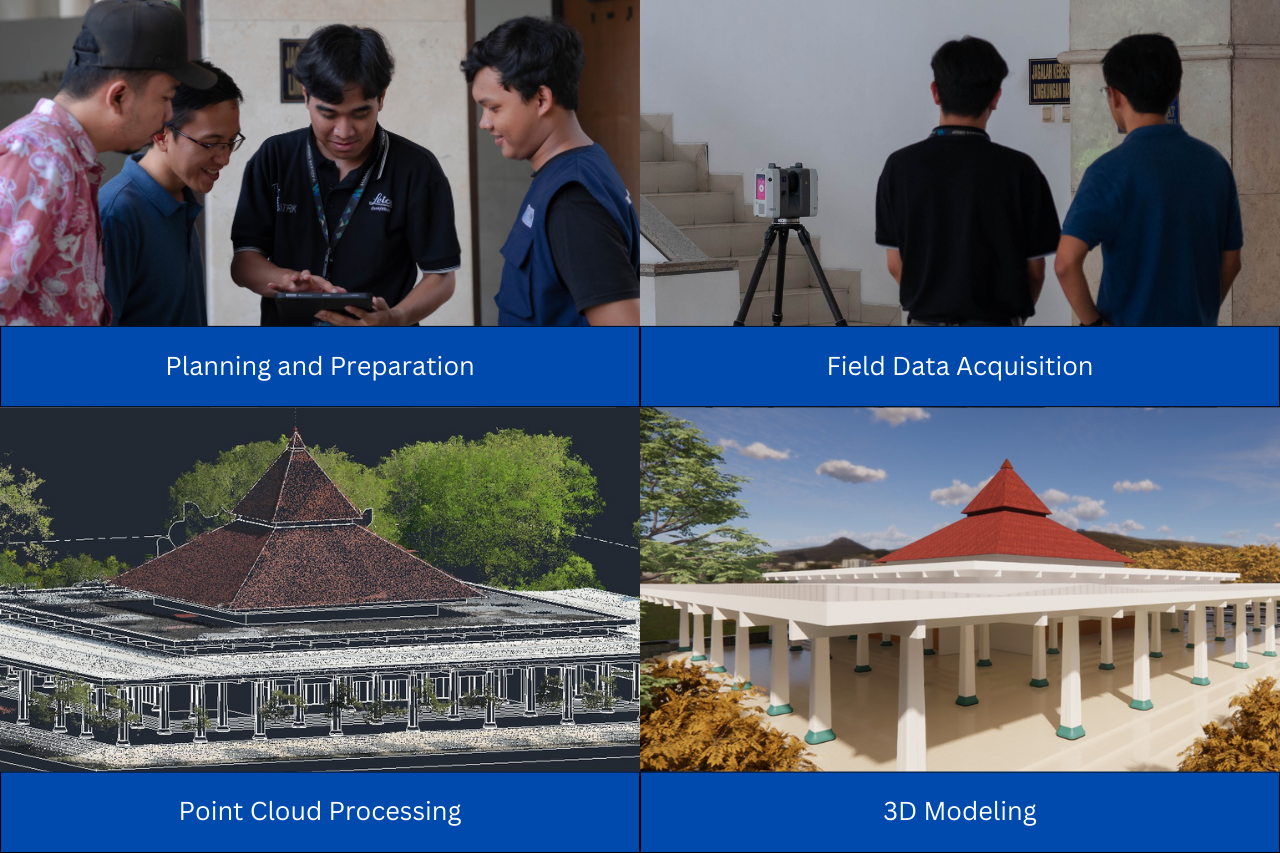
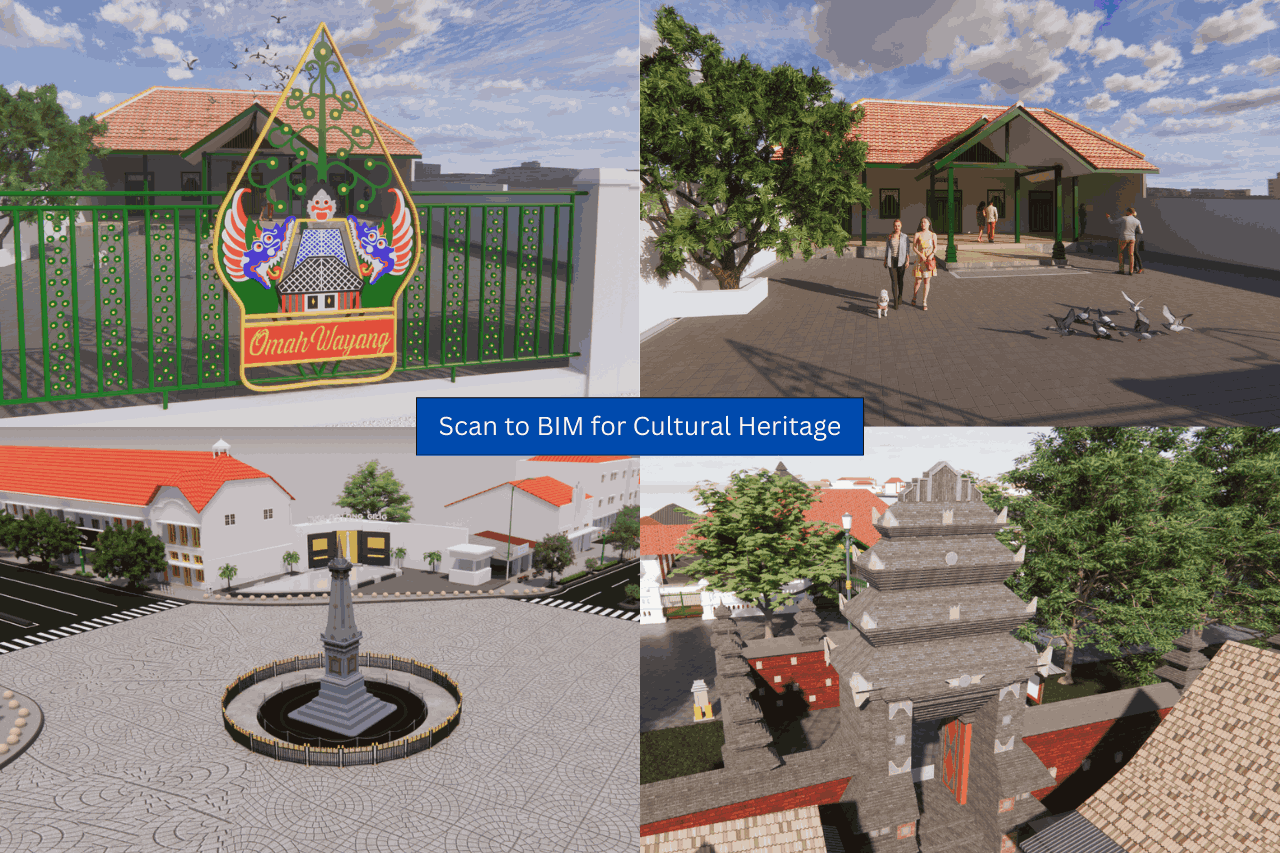
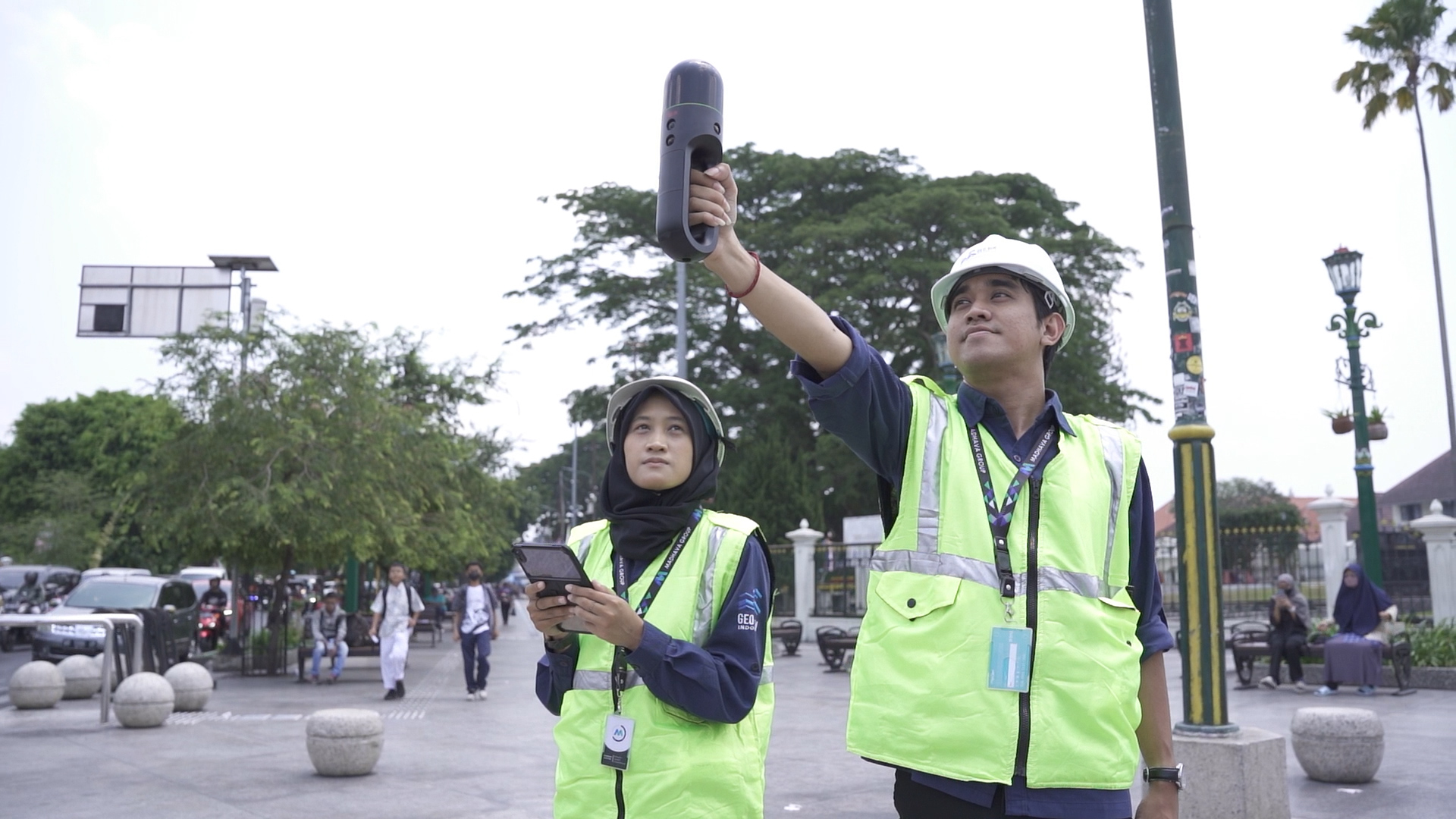
As part of this digital transformation, Geo BIM Indonesia provides integrated BIM Data Center solutions tailored to operational needs. In addition to BIM implementation, Geo BIM Indonesia offers Scan to BIM services and advanced 3D modeling for Data Centers, enabling accurate digital representation of existing facilities.
Through laser scanning and precise modeling workflows, existing Data Center conditions can be converted into reliable BIM models. This allows organizations to:
- Digitize legacy infrastructure
- Improve documentation accuracy
- Enhance clash detection processes
- Strengthen facility management strategies
By combining Scan to BIM technology with structured 3D modeling, Geo BIM Indonesia helps companies build Data Centers that are more transparent, efficient, and adaptable to change.
In today’s fast-paced digital environment, Data Centers cannot rely on fragmented documentation or manual tracking. With BIM, infrastructure becomes a controlled, intelligent system that supports business continuity and long-term operational stability.

.png)