.webp)
Don’t Scan Blindly: Choosing the Right SLAM or TLS Technology
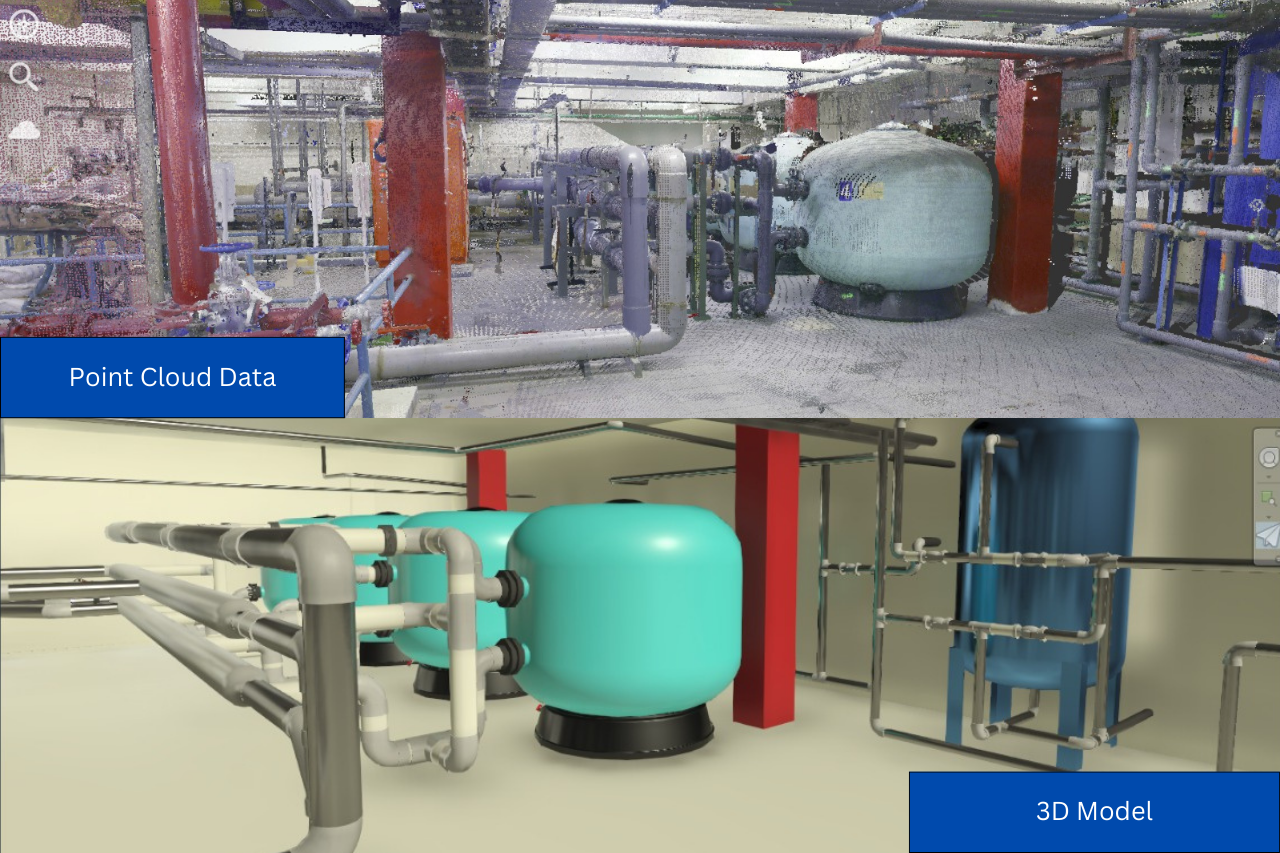
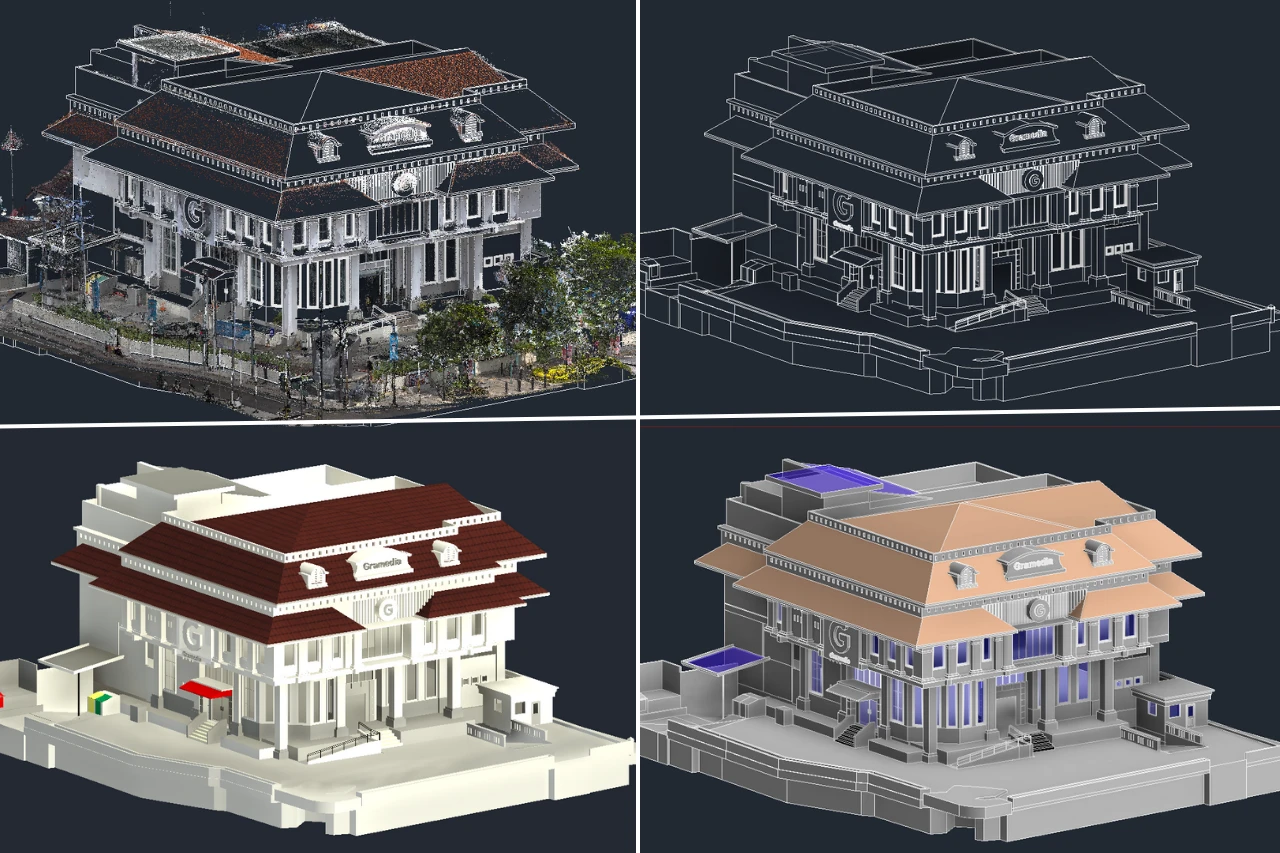
In the Scan to BIM workflow, 3D scanning plays a crucial role in capturing accurate as-built conditions that will be used throughout the BIM modeling process. Several data acquisition methods can be applied, but the most commonly used technologies today are SLAM (Simultaneous Localization and Mapping) and TLS (Terrestrial Laser Scanner).
As a provider of 3D scanning services and a BIM consultant, Geo BIM Indonesia has delivered various projects using both technologies. Each method has its own strengths and limitations. Understanding these differences is essential to selecting the most suitable technology for your project.
SLAM (Simultaneous Localization and Mapping)
SLAM is a 3D scanning method that uses handheld or backpack-mounted LiDAR devices integrated into a mobile system. This technology allows data acquisition while moving, making it highly efficient for large, complex, or confined areas. The main advantages of SLAM include fast data acquisition, high mobility, and ease of access to hard-to-reach areas. The equipment setup is relatively simple and requires fewer personnel in the field, making SLAM a cost-effective and time-efficient solution. However, SLAM generally offers a lower level of accuracy compared to TLS. As a result, it is less suitable for projects that require high-detail BIM models or millimeter-level precision.
TLS (Terrestrial Laser Scanner)
TLS (Terrestrial Laser Scanner) is a static 3D scanning method that uses a laser scanner mounted on a tripod. The scanner captures millions of laser points from fixed positions, producing highly dense and accurate point cloud data. The key advantage of TLS is its high accuracy, often reaching millimeter-level precision, along with superior point cloud density. This makes TLS ideal for detailed Scan to BIM applications, engineering analysis, and projects requiring precise geometric representation. On the other hand, TLS requires longer acquisition time, more complex setup procedures, and careful planning of scan positions to ensure complete coverage.
How to Choose the Right Technology?
Choosing between SLAM and TLS should be based on project requirements rather than technology preference alone. SLAM is suitable for projects that require speed, high mobility, and wide area coverage. It is commonly used for:
- Construction progress monitoring
- Interior building mapping
- Mapping GPS-denied or underground environments
- Rapid as-built data collection for renovation planning
TLS, on the other hand, is more suitable for projects that demand high precision and detailed geometry. Typical applications include:
- Detailed BIM modeling
- Building façade surveys
- Industrial plant and facility modeling
- Heritage restoration projects
- Quality control and structural deformation analysis
SLAM or TLS: Which Is Better for Scan to BIM?
There is no single “best” method for all projects. Both SLAM and TLS have their respective advantages, and in many cases, a combination of the two technologies delivers the most optimal results. SLAM can be used for rapid contextual mapping, while TLS focuses on critical areas requiring high accuracy.
As a BIM consultant, Geo BIM Indonesia begins every Scan to BIM project with a thorough assessment of the required output, accuracy level, project scale, and environmental conditions (indoor or outdoor). The success of a Scan to BIM project largely depends on selecting the right 3D scanning strategy. Choosing the wrong technology can impact data quality, modeling accuracy, and overall project outcomes. With proper planning and support from experienced 3D scanning service providers like Geo BIM Indonesia, Scan to BIM results can be accurate, efficient, and fully fit for purpose.
Consult your Scan to BIM and 3D Scanning needs with Geo BIM Indonesia.
📞 +62 838-3866-5598 (Sales Engineer – GeoBIM Indonesia)
.png)