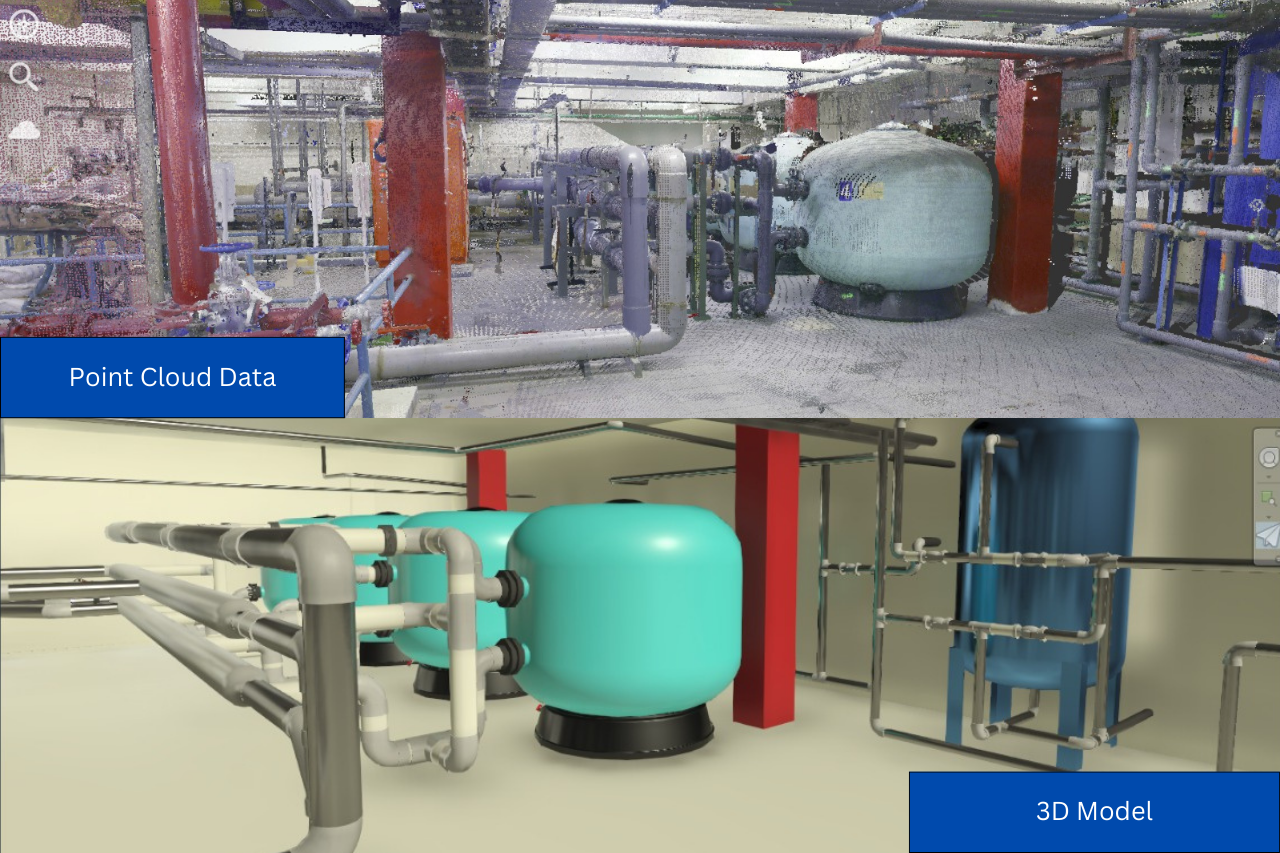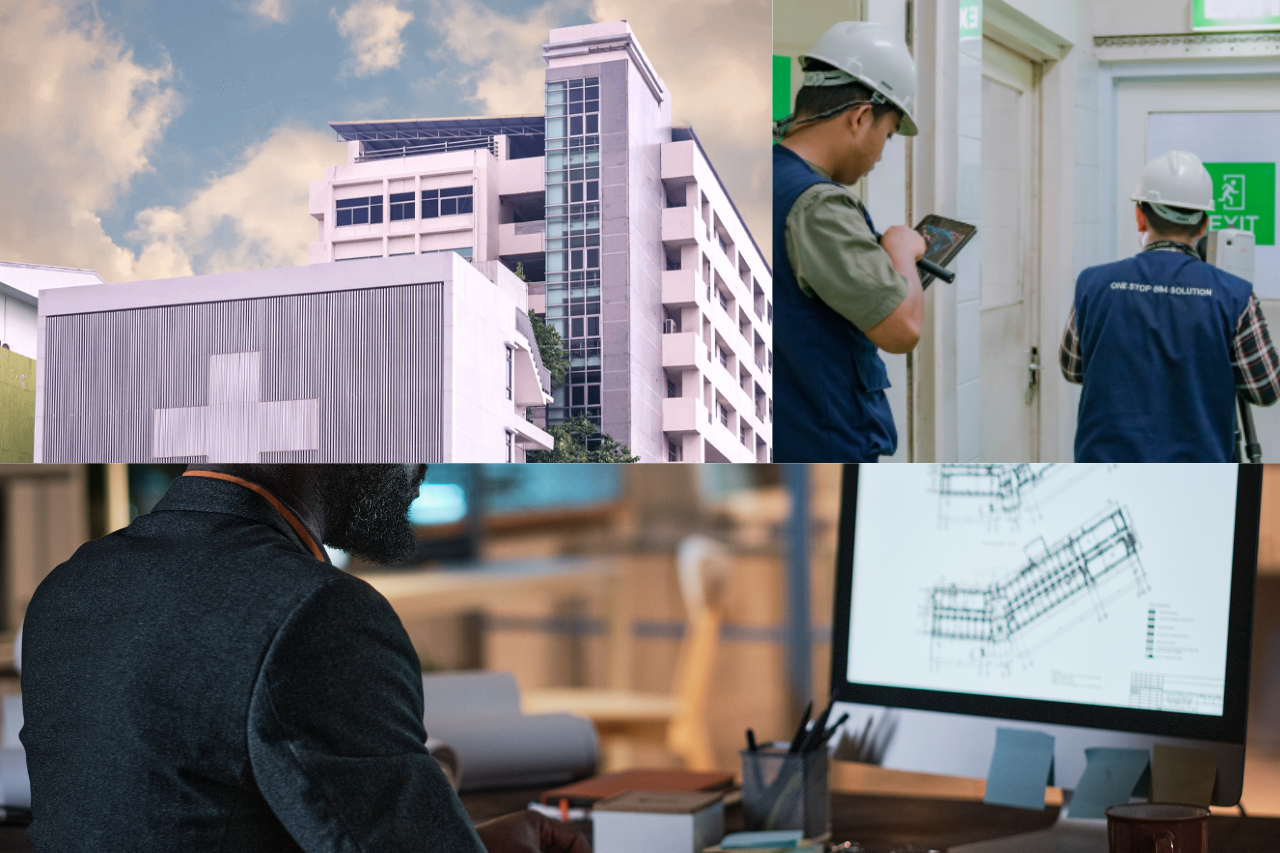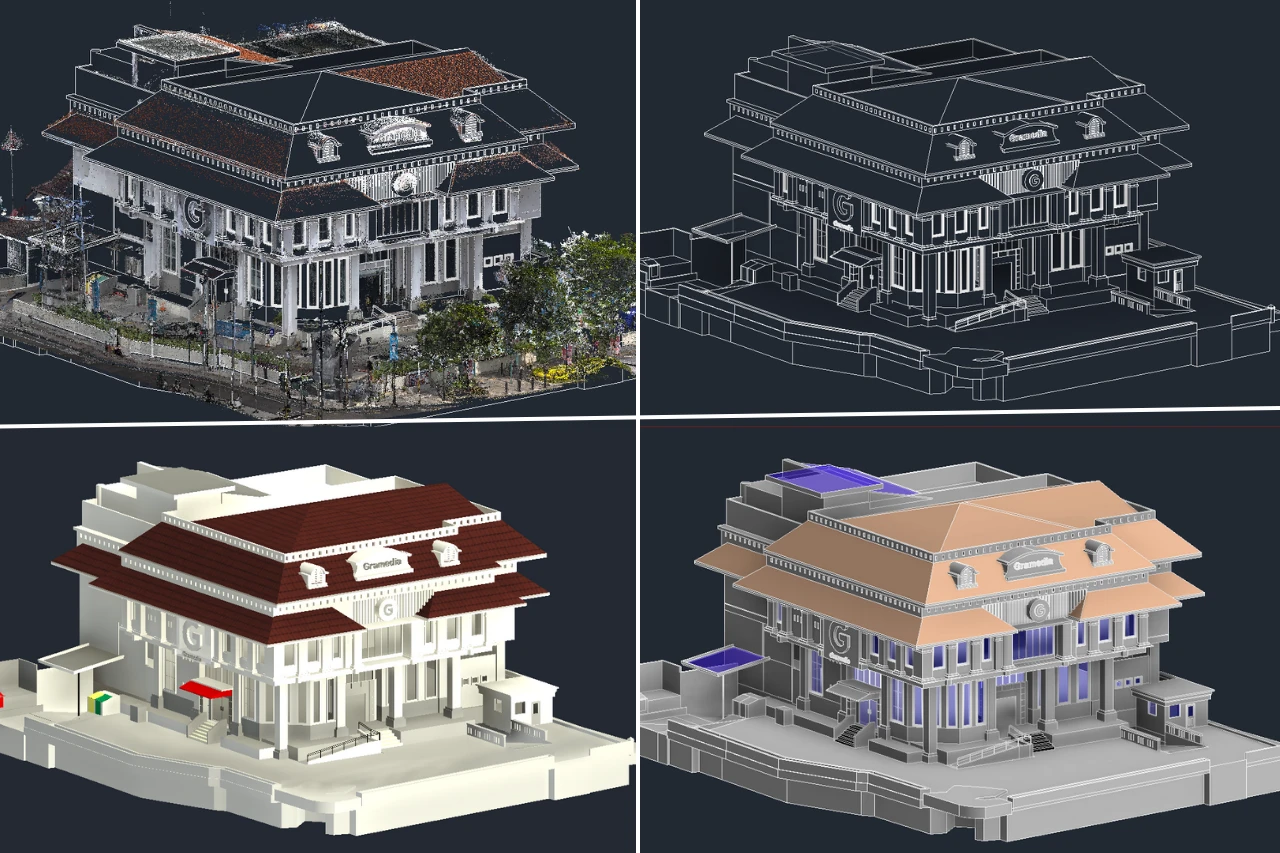
The rapid development of digital technologies has significantly transformed how we capture, visualize, and interact with real-world environments. In industries such as architecture, construction, geospatial mapping, gaming, and virtual reality, there is an increasing demand for 3D visualization methods that are not only visually realistic but also efficient and capable of real-time performance. Traditional 3D modeling techniques often rely on mesh-based structures that require extensive manual work and heavy computational resources, which can limit scalability and realism in complex environments.
To address these limitations, a breakthrough technology known as Gaussian Splatting has emerged as a new approach for high-fidelity 3D reconstruction. This method allows real-world scenes to be transformed into highly detailed digital representations using images or video inputs, while maintaining both speed and visual accuracy. As a result, Gaussian Splatting is becoming one of the most promising technologies for next-generation 3D visualization and digital twin development.
What Is Gaussian Splatting?
3D Gaussian Splatting is an advanced rendering technique that represents a three-dimensional scene using millions of small, semi-transparent elements called Gaussian “splats.” Each splat can be imagined as a tiny volumetric particle in 3D space, defined by key attributes such as position, color, shape, opacity, and spatial orientation. When combined in large quantities, these splats form a continuous and highly realistic representation of objects, environments, and complex spatial structures.
Unlike traditional polygon-based 3D models that depend on triangles and meshes, Gaussian Splatting uses a point-based volumetric representation. This allows the system to capture subtle visual details such as soft edges, reflections, lighting variations, and complex textures more naturally. The result is a photorealistic 3D model that closely resembles real-world imagery while still being computationally efficient and flexible for rendering from different viewpoints.
Another important aspect of Gaussian Splatting is its ability to bridge the gap between classical computer graphics and modern neural rendering techniques. While methods like Neural Radiance Fields (NeRF) focus on high-quality rendering using neural networks, Gaussian Splatting achieves similar visual fidelity with significantly improved rendering speed, making it more suitable for real-time applications.
How Gaussian Splatting Works
The workflow of Gaussian Splatting begins with data acquisition, typically in the form of images or video sequences captured from multiple angles around a physical object or environment. These inputs are then processed using Structure-from-Motion (SfM) techniques, which estimate camera positions and reconstruct an initial sparse 3D point cloud of the scene. This step is crucial because it provides the geometric foundation for the entire reconstruction process.
Once the sparse point cloud is generated, each point is converted into a Gaussian splat. At this stage, additional parameters are assigned to each splat, including color information, size, transparency, and orientation. These parameters allow each splat to behave like a small volumetric representation that contributes to the overall appearance of the scene.
After the Gaussian representation is established, the system renders the 3D scene into a 2D image from a selected camera perspective. This rendered output is then compared with the original input images, and optimization algorithms are applied to minimize differences between them. Through this iterative refinement process, the model gradually improves in accuracy and visual quality.
One of the key strengths of Gaussian Splatting lies in its ability to leverage GPU acceleration. By processing millions of splats in parallel, the system can achieve real-time rendering performance even for highly complex environments. This makes it particularly suitable for interactive applications such as virtual walkthroughs, simulation environments, and digital twin visualization platforms.
Advantages of Gaussian Splatting
Gaussian Splatting offers several important advantages that make it highly relevant for modern 3D visualization needs. One of the most significant benefits is its real-time rendering capability. Unlike traditional reconstruction methods that require heavy computation and long rendering times, Gaussian Splatting can generate high-quality visuals instantly, enabling smooth and interactive experiences.
Another key advantage is its computational efficiency. Since it does not rely on dense polygon meshes or complex surface reconstructions, Gaussian Splatting can represent large-scale environments with relatively lower memory consumption. This makes it highly scalable for applications such as city modeling, construction site monitoring, and infrastructure visualization.
In addition to efficiency, Gaussian Splatting delivers exceptional visual quality. It is particularly strong in representing natural lighting effects, reflections, transparency, and fine surface details. Even when using standard RGB images captured from consumer-grade cameras, the resulting 3D model can achieve near-photorealistic output, making it highly accessible for real-world applications.
The versatility of this technology is also a major advantage. Gaussian Splatting is widely used in architecture and construction for creating digital twins of buildings, enabling stakeholders to visualize and analyze structures in a highly immersive way. In the entertainment industry, it is used for gaming, film production, and augmented or virtual reality experiences. It also has strong potential in heritage preservation, where historical sites can be digitally reconstructed for documentation, education, and virtual tourism purposes. In industrial applications, it supports inspection workflows by enabling remote visualization of assets with high accuracy.
Conclusion
Gaussian Splatting represents a significant evolution in the field of 3D visualization and computer graphics. By combining point-based volumetric representation with real-time GPU rendering, it offers a powerful alternative to traditional modeling and neural rendering techniques. Its ability to produce highly realistic, efficient, and scalable 3D environments makes it a valuable tool across multiple industries.
As digital transformation continues to accelerate, technologies like Gaussian Splatting will play an increasingly important role in shaping the future of spatial computing, digital twins, and immersive visualization systems. Its balance of performance and realism positions it as a key enabler for next-generation 3D applications.
Ready to Transform Your 3D Visualization?
Consult your advanced 3D modeling and digital twin needs with GeoBIM Indonesia for cutting-edge geospatial and visualization solutions tailored for modern infrastructure and digital transformation projects.
📞 082134939917 (Sales Engineer GeoBIM)
Menambahkan konten
.png)