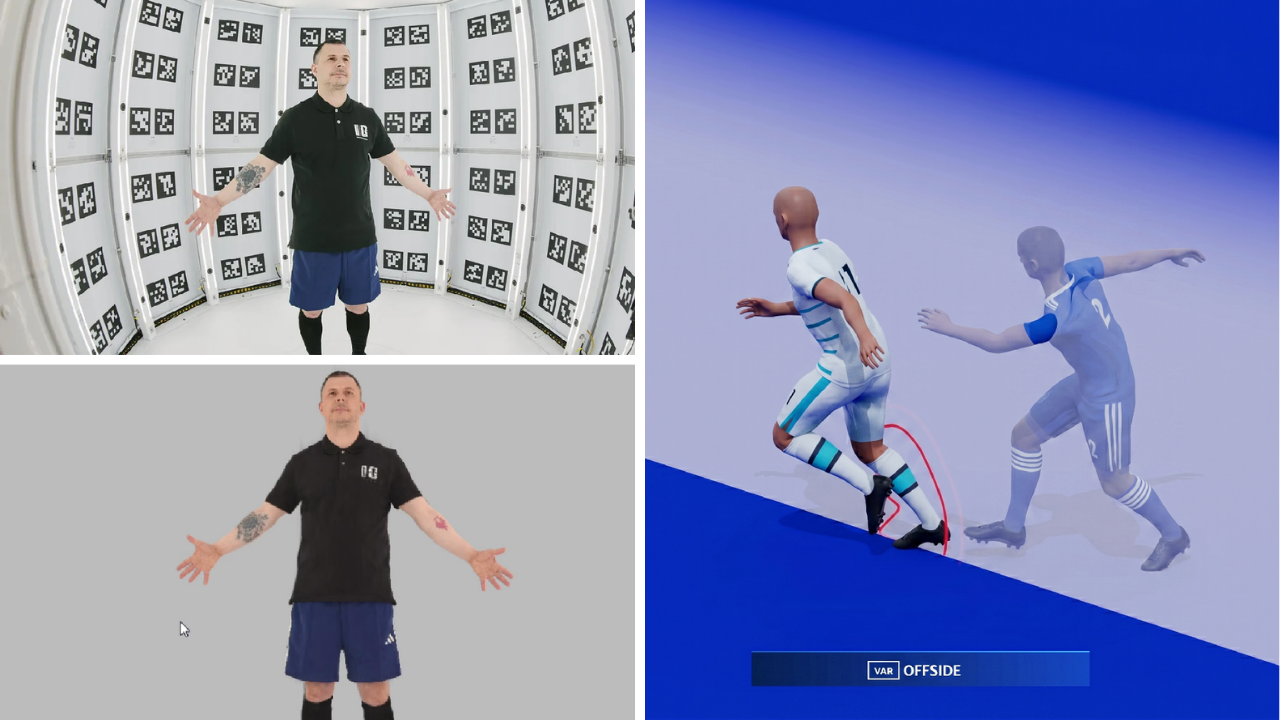
The 2026 FIFA World Cup is introducing another major technological advancement to improve the accuracy and fairness of football matches. A total of 1,248 players underwent a digital body scanning process to create highly accurate 3D avatars that represent each player's physical dimensions. These digital models play an important role in supporting Semi-Automated Offside Technology (SAOT), an intelligent system designed to assist referees in making faster and more objective offside decisions.
As football continues to evolve, technology has become an essential part of the game. From goal-line technology to the Video Assistant Referee (VAR), innovations have helped reduce controversial decisions during matches. The addition of 3D player avatars represents another step forward, combining 3D scanning, artificial intelligence (AI), and computer vision to improve officiating at the world's biggest football tournament.
Why Does FIFA Create 3D Avatars for Every Player?
Before the tournament began, every participating player completed a digital body scanning process to generate a personalized 3D avatar. Unlike standard player models, these avatars accurately replicate each athlete's body proportions, including the head, torso, arms, and legs. This level of precision is critical because offside decisions often depend on the exact position of a player's body at the moment the ball is played.
The purpose of these avatars extends beyond creating realistic graphics. The digital models provide the reference data required by the offside detection system to determine which body parts are legally allowed to play the ball. Since the Laws of the Game specify that only certain body parts are considered when judging offside, having an accurate representation of every player's body improves the consistency of the analysis.
Even a difference of only a few centimeters can change the outcome of an offside decision. Using player-specific digital models minimizes uncertainty and reduces the possibility of measurement errors. As a result, referees and VAR officials receive more reliable information when reviewing close calls, helping maintain fairness throughout every match.
How Semi-Automated Offside Technology Works
The Semi-Automated Offside Technology (SAOT) combines multiple technologies into one integrated decision-support system. Specialized cameras positioned around the stadium continuously monitor the movement of every player and the ball throughout the match. These cameras capture thousands of data points every second, allowing the system to understand player positions with remarkable precision.
Artificial intelligence processes the captured data in real time by analyzing player movements, ball trajectory, and spatial relationships on the field. When a potential offside situation occurs, the system automatically detects the relevant players and calculates whether an attacking player is ahead of the second-last defender at the exact moment the ball is passed.
Once the system identifies a possible offside, an alert is immediately sent to the Video Assistant Referee (VAR) team for verification. Rather than replacing human officials, SAOT serves as an intelligent assistant that provides highly accurate measurements within seconds. The final decision remains with the match officials, but the technology significantly reduces the time required for analysis while improving consistency across every game.
Improving Transparency for Players, Officials, and Fans
One of the biggest advantages of FIFA's 3D player avatars is the ability to communicate offside decisions more clearly. After an offside call has been confirmed, the digital player models are used to generate a three-dimensional animation that illustrates the exact positions of the players, the offside line, and the body part involved in the decision.
This visualization makes complex decisions much easier for broadcasters, commentators, players, and spectators to understand. Instead of relying solely on traditional camera angles, viewers can see a precise digital reconstruction that explains why an offside was given. The improved visualization reduces confusion and helps audiences better understand the decision-making process.
Greater transparency also strengthens confidence in officiating. By combining artificial intelligence, advanced camera systems, and accurate 3D avatars, FIFA creates a decision-support system that is faster, more objective, and easier to explain. This contributes to a more enjoyable viewing experience while reducing unnecessary controversy during high-profile international matches.
3D Scanning Continues to Drive Innovation Beyond Football
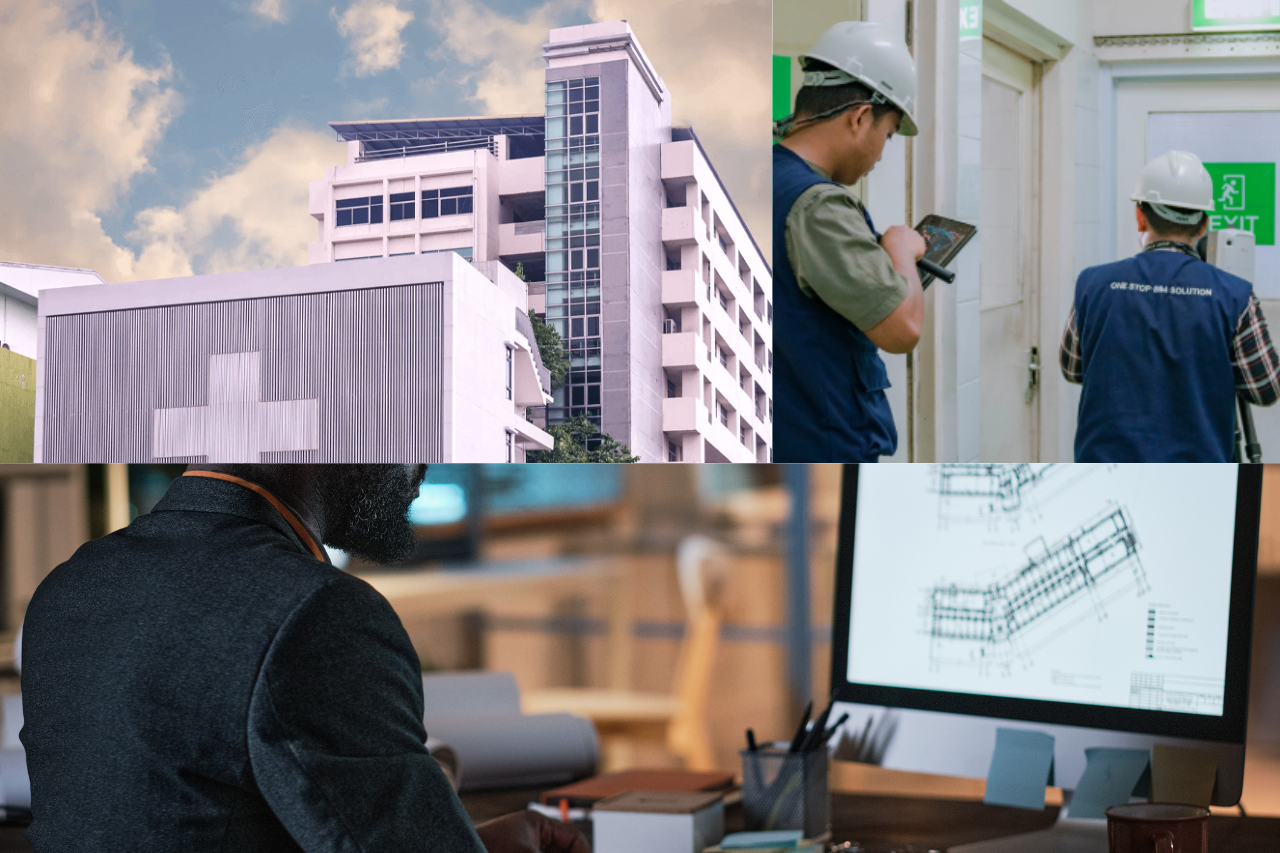
The use of 3D player avatars at the FIFA World Cup demonstrates how 3D scanning technology has evolved far beyond architecture and engineering. The same reality capture technology used to scan professional athletes is widely applied in industries such as construction, manufacturing, infrastructure, healthcare, cultural heritage preservation, and facility management. By creating highly accurate digital representations of real-world objects, organizations can improve planning, analysis, and operational efficiency across a wide range of projects.
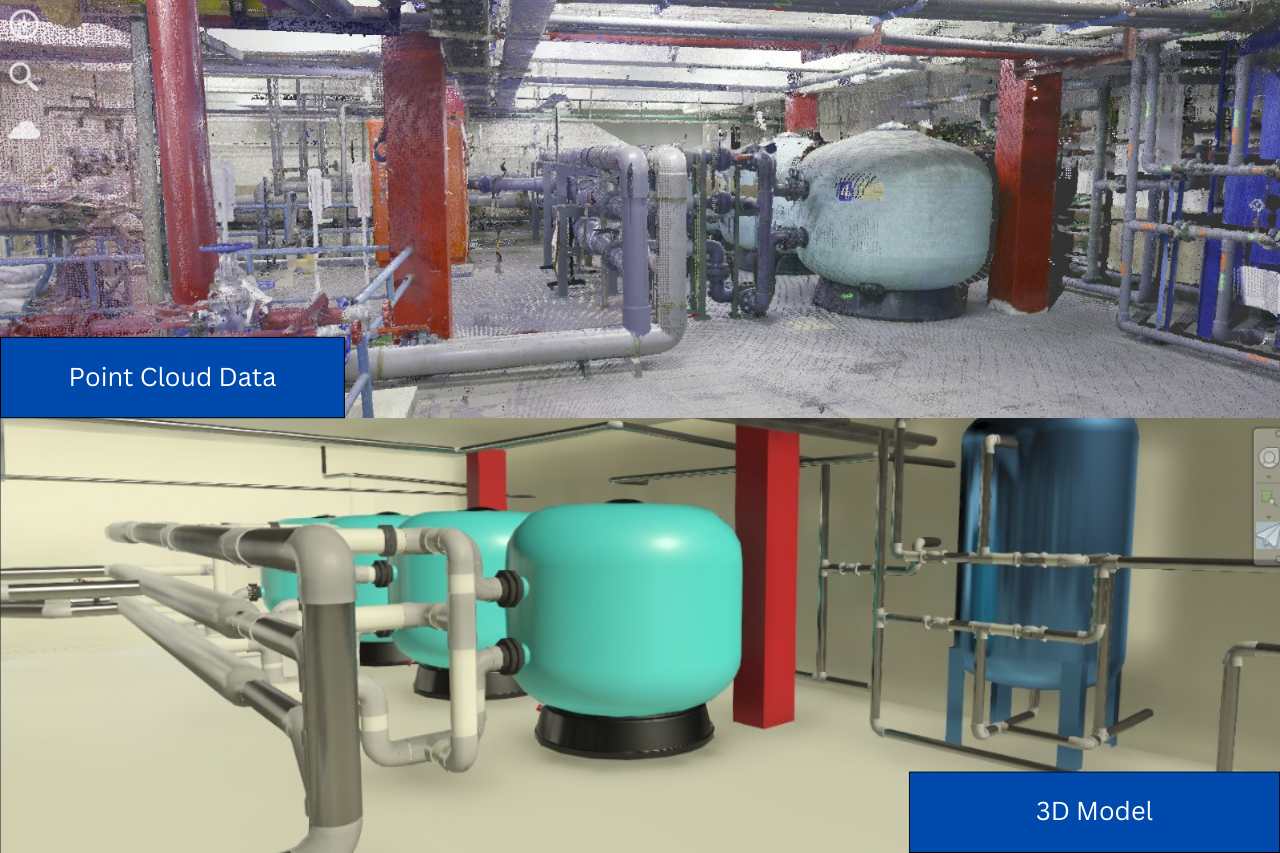
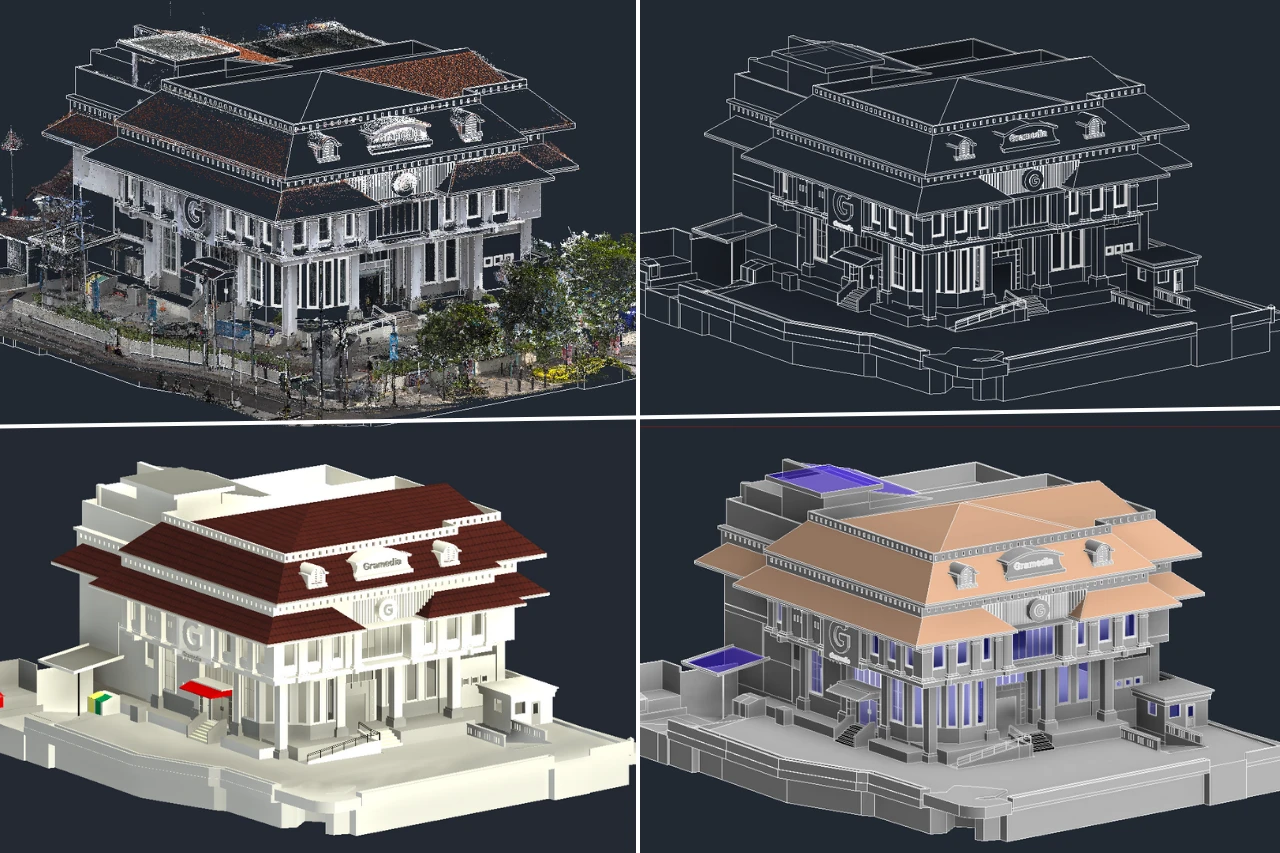
In the built environment, 3D scanning serves as the foundation for 3D modeling, Scan to BIM, and Digital Twin development. Accurate point cloud data enables engineers, architects, and asset owners to document existing conditions, plan renovations, monitor facilities, and manage infrastructure throughout its lifecycle. The adoption of similar technologies by FIFA demonstrates how precise digital models can support better decision-making in completely different fields, from sports to construction.
Whether your project involves commercial buildings, industrial facilities, stadiums, public infrastructure, or heritage assets, high-quality 3D modeling begins with accurate reality capture. GeoBIM Indonesia provides professional 3D Scanning, 3D Modeling, Scan to BIM, and Digital Twin services to help organizations create reliable digital representations of their assets. With advanced scanning technology and experienced specialists, GeoBIM Indonesia delivers accurate spatial data that supports smarter planning, efficient asset management, and informed decision-making. Contact GeoBIM Indonesia today to discuss your 3D modeling and reality capture requirements.
Ready to Transform Your 3D Visualization?
📞 082134939917 (Sales Engineer GeoBIM)
.png)