In modern construction, the use of BIM (Building Information Modeling) has increasingly become the standard for large-scale projects. One essential element within BIM is the understanding of LOD (Level of Development), particularly for crucial components like piping systems. LOD dictates the extent to which a BIM model element is developed geometrically and informationally. In the context of a BIM pipe model, this level of detail critically impacts the accuracy of coordination, planning, and long-term asset maintenance.
What is LOD in BIM?
LOD (Level of Development) is a standard used in BIM to quantify how detailed and complete the information within a model element is. LOD helps manage the complexity of the model according to the required phase of the project.
With LOD, everyone on the project has a common frame of reference regarding the required extent of the model's development, both in terms of geometry and other embedded information. LOD typically ranges from level 100 to 500, where each number signifies how developed the element is within the model. The main functions of LOD are to:
- Determine what information needs to be displayed at each stage of the model.
- Adjust the model's level of detail according to project needs (to prevent the model from becoming unnecessarily heavy).
- Serve as the basis for calculating material take-offs (e.g., pipe length, number of fittings, or concrete volume).
LOD in Piping Systems
The development of the pipe model progresses across these stages, ensuring that detail is added precisely when it is needed for the corresponding project phase:
-
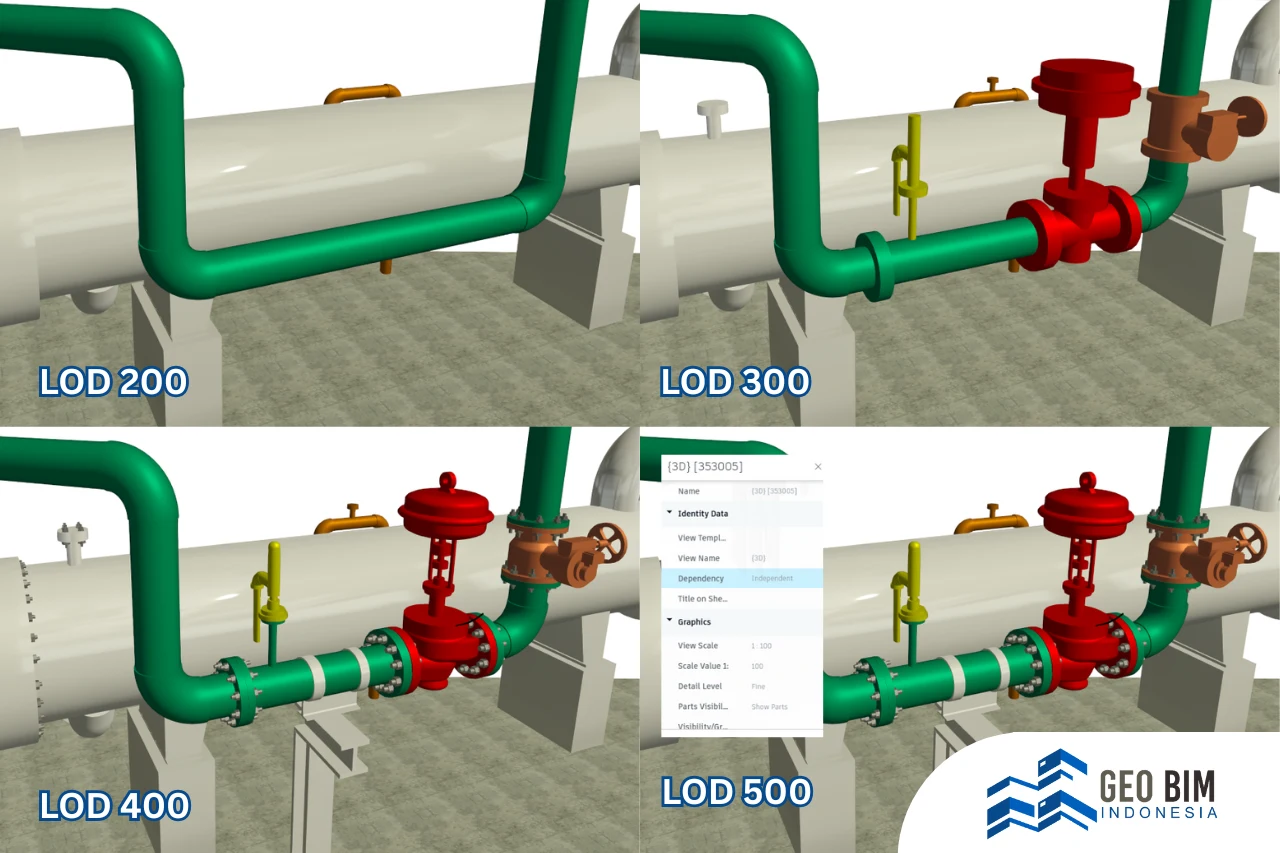
LOD 200 – Schematic Design
At the initial LOD 200 stage, the pipe model remains conceptual. The main focus is on space allocation and the early representation of the system. The model in this phase is used to place the main piping equipment (such as chillers or pumps) at approximate locations. The main pipe runs are depicted using generic 3D representations (simple cylinders) representing estimated diameters and their main routes. The objective of LOD 200 is to ensure that sufficient space is allocated for the piping system and to facilitate early coordination with structural elements. Non-geometric data is minimal.
-
LOD 300 - Detailed Design
LOD 300 is the level widely used during the technical design phase. At this stage, the pipe model already shows a more accurate shape and size. The BIM pipe model at this level has precise and definitive dimensions and placement. Every element, including fittings (such as elbows, tees, and reducers) and pipe accessories, is modeled as a basic object representing its actual shape and is placed at the correct 3D coordinates. LOD 300 is essential for conducting thorough clash detection analysis and generating accurate shop drawings used on site.
-
LOD 400 - Fabrication
The LOD 400 stage is the level required for manufacturing, pre-fabrication (spooling), and construction detailing. Every pipe element is displayed individually and precisely. This includes the addition of minor components such as valves, air vents, and flow meters with highly accurate dimensions. The model is ready to be used as a reference for shop drawings and pipe fabrication.
-
LOD 500 - Operation and Maintenance
LOD 500 is the highest level in the BIM LOD standard. At this stage, the pipe model is ready for asset operation and maintenance during the building's operational phase. This is the As-Built model that reflects the actual condition of the piping installed on site. The focus shifts entirely to Asset Management information. Every pipe component and piece of equipment is now tagged with vital operational data, such as serial numbers, installation dates, warranty information, and links to maintenance manuals. This model serves as a digital guide for the Facility Management team for maintenance and planning future replacements.
LOD is not just about visualization and geometry. It is fundamentally about managing information and project needs at every phase. Managing the BIM model with the appropriate LOD can enhance efficiency, minimize risk, and ensure that decisions are made based on accurate data.
GeoBIM Indonesia is ready to assist you in modeling your systems according to project requirements at various LOD levels, from initial design all the way through facility operations. With experience and deep understanding of international BIM standards, we offer modeling solutions that are precise, efficient, and ready for site deployment.
Contact us for a consultation or BIM modeling services based on LOD standards tailored to your project's scale and complexity.
📞 +62 838-3866-5598 (Sales Engineer – GeoBIM Indonesia)
.png)