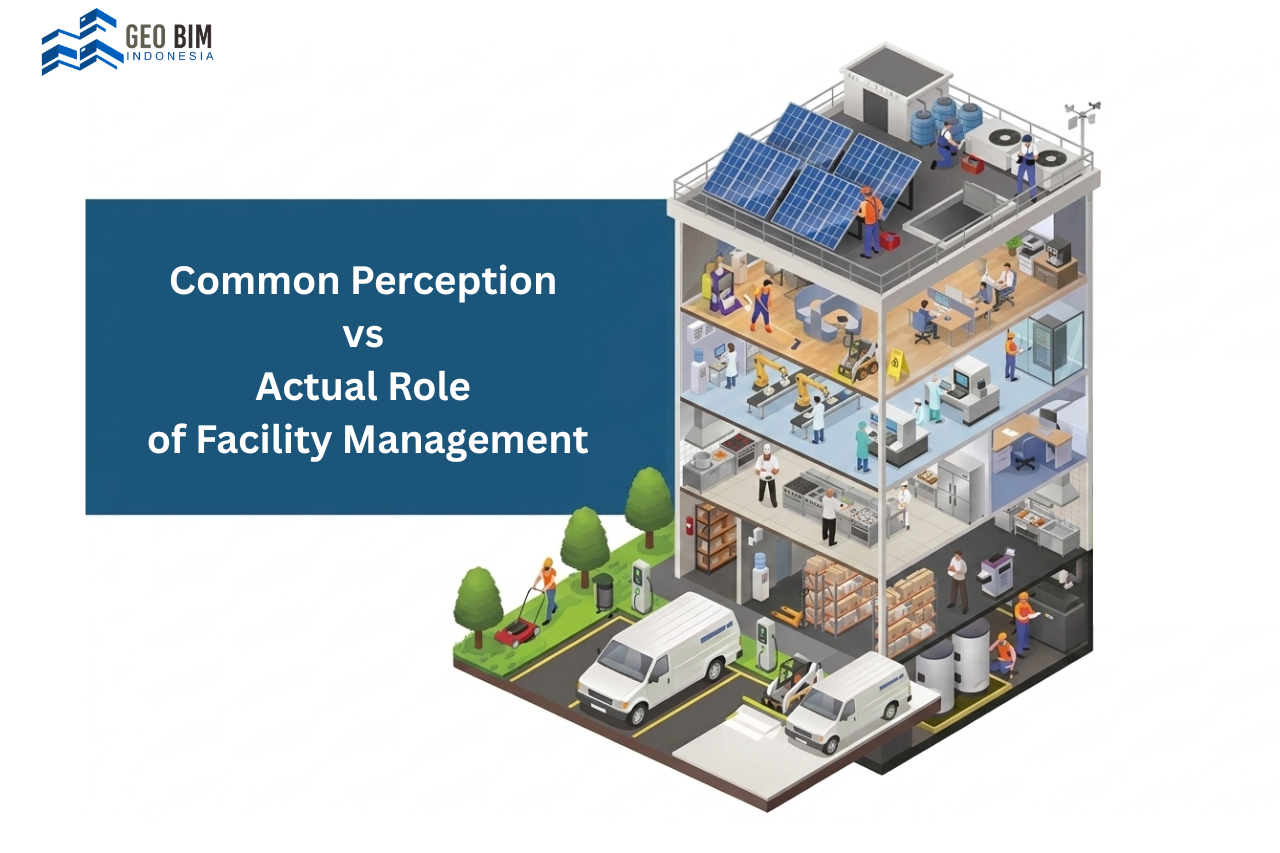
Facility management is often perceived as a role that focuses only on maintaining buildings or fixing broken facilities. In many organizations, it is associated with operational tasks such as cleaning, repairing equipment, and handling daily building issues.
However, this perception only reflects a small portion of the real responsibilities of facility management. In modern building operations, facility management has evolved into a strategic function that supports operational efficiency, sustainability, and workplace productivity. With the advancement of digital technologies such as Building Information Modeling (BIM) and Scan to BIM, facility management can now be performed more effectively through data-driven and integrated systems.
Common Perception of Facility Management
Many people believe that the primary responsibility of facility management is simply maintaining building operations. This perception usually includes tasks such as:
- Cleaning and maintaining building spaces
- Fixing damaged facilities or equipment
- Managing day-to-day building operations
- Responding to daily operational issues
These activities are indeed part of facility management. However, they represent only the visible side of the job. Most facility management work happens behind the scenes and involves complex coordination between systems, assets, and operational teams.
Because many of these responsibilities are not directly visible to building users, facility management is often underestimated as a purely technical or maintenance-based role. In reality, modern facility management involves strategic planning, operational optimization, and long-term asset management to ensure that buildings operate efficiently and safely.
The Actual Role of Facility Management
The actual role of facility management extends far beyond simple maintenance tasks. It involves a comprehensive approach to managing buildings, infrastructure, and workplace environments.
One key responsibility is operation and support services. Facility managers ensure that building systems such as electrical systems, HVAC, water supply, and other utilities operate efficiently and reliably. Proper system management ensures that business activities within the building can run smoothly.
Another important role is sustainability and resource management. Facility management teams are responsible for monitoring energy consumption, water usage, and other resources to improve efficiency and reduce operational costs. Sustainable building operations are becoming increasingly important for organizations seeking to reduce environmental impact.
Facility management also plays a crucial role in health, safety, and risk control. This includes maintaining fire protection systems, ensuring safe evacuation routes, and monitoring potential risks that could affect building occupants. A well-managed facility helps create a safe and secure environment for everyone inside the building.
Finally, facility management contributes to workplace and space optimization. By analyzing how spaces are used, facility managers can improve layout efficiency, support employee productivity, and optimize the overall working environment.
.jpg)
BIM as a Smart Solution for Facility Management
The integration of BIM technology has significantly improved how facility management is performed. BIM allows all building information to be stored in a single digital model that integrates architectural, structural, and mechanical system data.
With BIM, facility management teams can easily access and monitor building assets in real time. Information such as equipment specifications, maintenance schedules, and asset histories can be retrieved directly from the digital model, making maintenance and monitoring much more efficient.
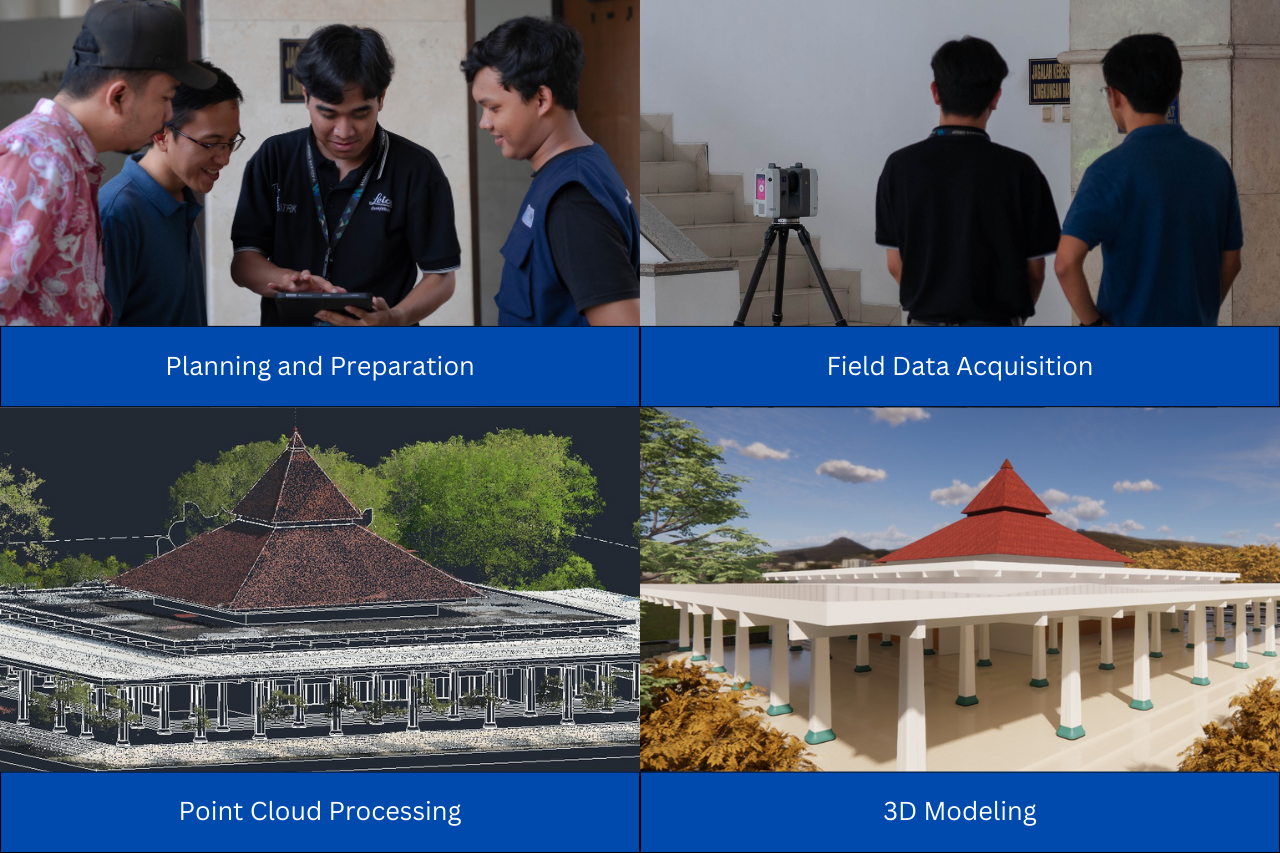
In addition, Scan to BIM technology enables existing buildings to be converted into accurate digital models using laser scanning or photogrammetry. This process creates a precise representation of the building that can be used for asset management, renovation planning, and maintenance operations.
By integrating building data into a centralized digital model, facility management teams can make better decisions, improve operational efficiency, and reduce long-term maintenance costs.
Conclusion
Facility management today is no longer limited to handling daily building issues or maintenance tasks. With the adoption of Building Information Modeling and Scan to BIM, facility management can be performed more efficiently through integrated digital building data. By using BIM, facility teams can easily access asset information, monitor building systems, and plan maintenance more effectively. For organizations that want to implement BIM for better facility management, consulting with experts is essential. GeoBIM Indonesia provides professional BIM consulting services to help companies integrate digital building models into their facility management processes, enabling smarter, more efficient, and data-driven building operations.

.png)